How to Season a Stainless Steel Air Fryer Basket: Easy Step‑by‑Step Guide to Prevent Sticking
Introduction
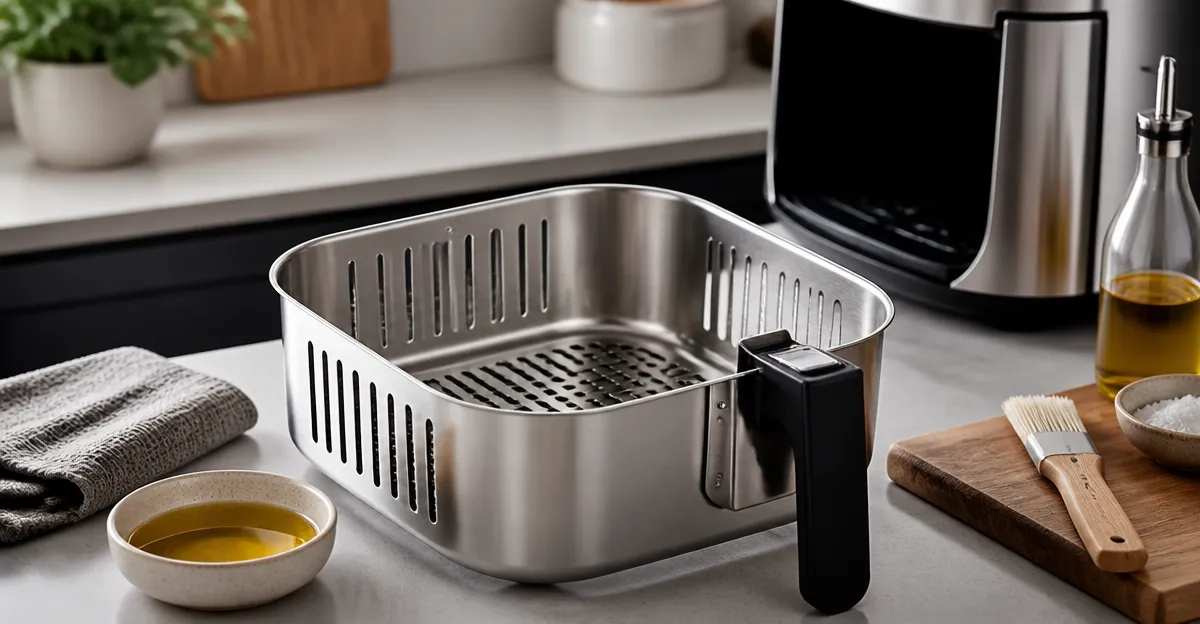
Seasoning a stainless steel air fryer basket creates a thin, non‑stick barrier that reduces food adhesion and simplifies cleaning. This guide will teach the reader how to prepare, season, and maintain a stainless steel basket so that every cooking session yields evenly crisped results without excessive oil or mess. By following the professional procedures outlined below, one can protect the investment, improve flavor development, and enjoy healthier meals with confidence.
The techniques described are applicable to most oven‑compatible air fryer baskets, including those from leading brands. The reader will also discover optional tools that accelerate the process while preserving the basket’s integrity. Although the guide recommends specific products, the steps can be completed with ordinary kitchen items if desired.
What You'll Need
- High‑temperature resistant oil (such as avocado or refined olive oil)
- Soft lint‑free cloth or paper towel
- Heat‑proof silicone brush
- Cleaning agent (mild dish soap)
- Drying rack or clean kitchen towel
- Optional: OPENICE Oven Air Fryer Basket – 15.3" x 11.0" stainless steel set with parchment paper
- Optional: TeamFar Air Fryer Basket – compact 9.3" x 7" stainless steel basket
- Optional: Baker's Signature Air Fryer Liners – 125 disposable parchment sheets
- Optional: P&P CHEF Air Fryer Rack Set – stackable stainless steel racks
- Optional: DONGULI Oven Air Fryer Basket – extra‑large 15.4" x 11.2" set
Step‑by‑Step Instructions
1. Thorough Cleaning of the Basket
Begin by removing any residual food particles, grease, or manufacturing oils. Fill a sink with warm water and add a few drops of mild dish soap. Submerge the basket and use a soft sponge to scrub the interior, paying special attention to the mesh openings where debris can accumulate.
Rinse the basket under running water until all soap residues disappear. Dry the basket completely on a clean rack; moisture left on stainless steel can cause water spots that interfere with the seasoning layer.
If the basket is part of a larger set such as the OPENICE Oven Air Fryer Basket, the included parchment paper can be placed on the tray during cleaning to catch drips and protect the oven surface. The stainless steel construction of this product (price $26.99, rating 4.6/5) ensures durability throughout repeated washes.
2. Selecting the Appropriate Oil
Seasoning requires an oil with a high smoke point to create a stable polymerized coating. Avocado oil, with a smoke point of approximately 520°F, is ideal because it forms a thin, resilient film without imparting unwanted flavors. Refined olive oil (smoke point ~465°F) is a suitable alternative for those who prefer a familiar pantry item.
Measure roughly one tablespoon of oil for a standard‑size basket. Apply the oil using a silicone brush; the brush’s heat‑resistant bristles spread the oil evenly across the mesh and interior walls, preventing pooling in the corners.
For smaller baskets such as the TeamFar Air Fryer Basket (price $14.72, rating 4.6/5), a reduced amount of oil (about one teaspoon) is sufficient because of the reduced surface area. The compact dimensions (8.7" x 6.5") make it easy to coat without excess.
3. Initial Low‑Heat Curing
Preheat the oven to 350°F, a temperature that allows the oil to polymerize without reaching the smoke point. Place the basket on the middle rack; if using a set that includes a tray, such as the OPENICE Oven Air Fryer Basket, position the basket directly on the tray to catch any runoff.
Allow the basket to bake for 20 minutes. During this period, the oil will bond to the stainless steel surface, forming a microscopic layer that reduces food adhesion. After the timer expires, turn off the oven and let the basket cool inside the chamber to avoid thermal shock.
Cooling gradually helps the polymerized coating set firmly, which is especially important for larger models like the DONGULI Oven Air Fryer Basket (price $29.97, rating 4.6/5). Its extra‑large dimensions (15.4" x 11.2") benefit from a slow temperature decline to prevent warping.
4. Repeating the Seasoning Cycle
For optimal non‑stick performance, repeat the oil‑application and low‑heat curing process two additional times. Each cycle builds a slightly thicker barrier, comparable to seasoning a cast‑iron skillet. Use a fresh tablespoon of oil for each iteration to avoid reusing degraded oil.
After the third cycle, inspect the basket. The interior should exhibit a faint, uniform sheen without dark spots. If any unevenness is visible, gently buff the area with a soft cloth and repeat a short 10‑minute bake at 350°F.
When using a stackable system such as the P&P CHEF Air Fryer Rack Set (price $14.99, rating 4.6/5), season each rack individually. The 360° airflow design of these racks ensures that the oil reaches every mesh opening, providing consistent results across all layers.
5. Maintaining the Seasoned Surface
After each cooking session, allow the basket to cool, then wipe away excess food with a soft paper towel. Avoid abrasive scrubbers; they can strip the seasoned layer. If stubborn residue remains, rinse quickly with warm water and dry immediately.
Periodically refresh the seasoning by applying a thin coat of oil and heating the basket at 300°F for 15 minutes. This maintenance step preserves the non‑stick quality and extends the basket’s lifespan.
For convenience, place a disposable parchment sheet from the Baker's Signature Air Fryer Liners on the basket before cooking. The liners (price $9.98, rating 4.6/5) protect the seasoned surface from direct contact with high‑fat foods, reducing the frequency of re‑seasoning while simplifying cleanup.
Tips & Pro Tips
- Choose oils with smoke points above 450°F to ensure a stable polymerized coating.
- Do not use aerosol cooking sprays; they contain additives that can interfere with seasoning.
- When cooking foods with natural sugars (e.g., carrots), monitor the temperature to prevent caramelization that may adhere to the basket.
- Store the basket in a dry environment; moisture promotes oxidation and can degrade the seasoned layer.
- For large batches, consider using multiple baskets (e.g., one OPENICE Oven Air Fryer Basket and one DONGULI Oven Air Fryer Basket) to avoid overcrowding and ensure even airflow.
Troubleshooting
| Problem | Possible Cause | Solution |
|---|---|---|
| Food still sticks after seasoning | Insufficient oil or uneven coating | Repeat the oil‑application step, ensuring full coverage of mesh openings. |
| Discoloration or dark spots | Oil burned at too high a temperature | Reduce oven temperature to 300‑350°F and re‑season with fresh oil. |
| Basket warps after repeated heating | Thermal shock from rapid temperature changes | Allow the basket to cool gradually inside the oven before removal. |
Conclusion
Seasoning a stainless steel air fryer basket is a straightforward process that yields lasting non‑stick performance and easier maintenance. By cleaning thoroughly, selecting a high‑smoke‑point oil, and applying multiple low‑heat cures, one creates a resilient coating that enhances flavor development and reduces the need for excess oil. Regular upkeep and the occasional use of disposable liners keep the basket in optimal condition for years of healthy cooking.
Readers are encouraged to apply these steps to any compatible basket, whether it belongs to the OPENICE Oven Air Fryer Basket, the TeamFar Air Fryer Basket, or any other stainless steel accessory. The investment of a few minutes now translates into consistently crisp, healthy meals and a cleaner kitchen.
Products Mentioned in This Guide
Frequently Asked Questions
Why should I season a stainless steel air fryer basket?
Seasoning creates a thin non‑stick layer that reduces food sticking, eases cleanup, and helps achieve even crispness.
What type of oil is best for seasoning a stainless steel basket?
Use a high‑temperature resistant oil such as avocado oil or refined olive oil to withstand the heat without smoking.
How many times should I repeat the seasoning process?
Apply oil and heat the basket 2–3 times; this builds a durable coating without over‑coating.
Can I use regular dish soap to clean a seasoned basket?
Yes, mild dish soap and a soft cloth are safe; avoid abrasive scrubbers that could strip the seasoning.
Do I need any special tools to season the basket?
A lint‑free cloth or paper towel and a heat‑proof silicone brush are helpful but not required; ordinary kitchen items work fine.